
Narco Roadblocks, Weak Nerves and Why the Caribbean Still Gets Funded
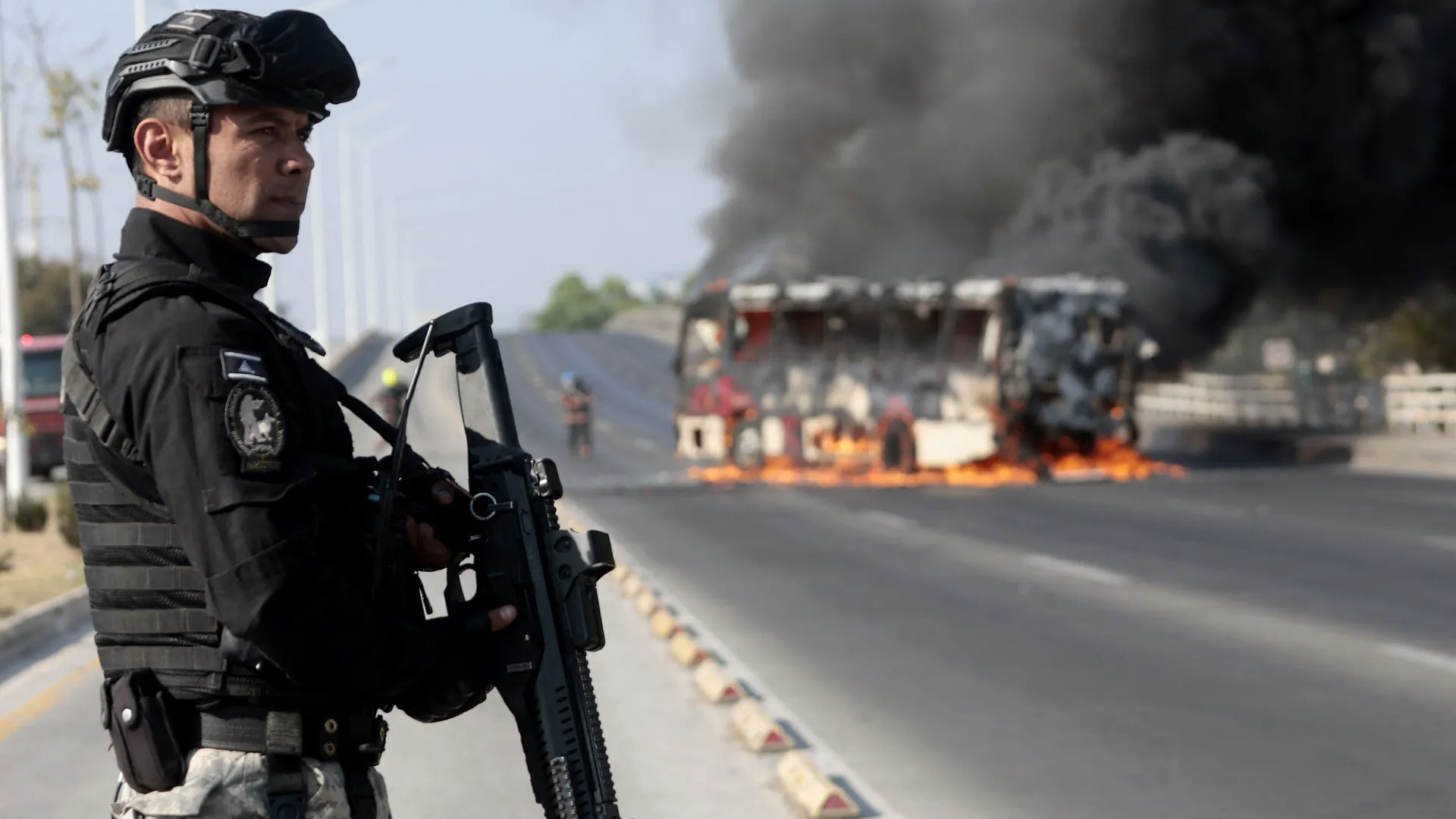
Another week, another round of headlines declaring that Mexico is on fire. A cartel leader is killed in a military operation, more than 200 narco roadblocks go up across the country, vehicles burn on highways, Puerto Vallarta shelters tourists in place, cruise lines divert ships, and foreign governments push out travel alerts. The storyline is familiar: chaos, fear, cancelations. But underneath the noise, something more uncomfortable is happening for investors in Caribbean destinations: the risk that was always there is finally being priced in, and that is exactly when real capital decides whether it’s staying, running, or buying.
Violence hits travel fast, but it doesn’t erase the map
Let’s be clear: cartel violence is not a rounding error. Multi-state narco blockades, road closures and arson against businesses are not “PR issues”; they are operational risk with real costs for tourism and logistics. Airports slow down, cruise companies reroute, travel advisors go into crisis mode and the U.S. and Canada update their warnings. In the short term, that hurts tourism flows, hotel occupancy and cash flow for local businesses, including those on Mexico’s Caribbean coast.
- Roadblocks and vehicle fires have been reported across multiple states after the killing of a major cartel leader, leading to highway closures, disrupted transport and widespread fear.
- In tourist hubs like Puerto Vallarta, authorities have issued shelter-in-place advisories, airlines have canceled flights and cruise lines have temporarily altered routes to avoid affected ports.
- Travel alerts and embassy advisories amplify the perception that the entire country is unsafe, even when violence is concentrated in specific corridors or states.
History and data are clear on one point: spikes in homicides and visible violence tend to depress tourist arrivals, especially among first-time or risk-averse travelers. That shock is painful for local economies. But it does not delete the Caribbean from the global map. It forces every actor in the chain (governments, operators, investors) to rethink how they manage, communicate and charge for risk.
Panic clears out the timid. Pricing in risk invites the adults.
Moments like these create an ugly but important sorting effect in destinations such as Cancun, Riviera Maya, Tulum and the wider Caribbean. The people who were “investing” because everything looked easy (perpetual high season, cheap leverage, glossy marketing and no security line item) suddenly discovered that they were never investing; they were gambling in a country they didn’t bother to understand.
- Short-term speculators panic at every travel alert. They slash prices, dump assets or freeze projects, often at the worst possible moment.
- Over-leveraged players who assumed endless growth discover that lenders, insurers and partners now insist on real security plans and governance before extending another peso or dollar.
- Operators with discipline (contingency protocols, diversified feeder markets, realistic ADR and capex for safety) quietly absorb market share, talent and sometimes real estate.
For serious investors, this is where the conversation gets honest. Risk in the Caribbean was never zero. It was simply underpriced and cosmetically hidden behind “paradise” marketing. Cartel blockades and travel disruption force a repricing: higher yields demanded, more conditions on governance, stronger covenants and a clearer separation between professional platforms and improvised projects.
“Security shocks don’t magically create opportunity; they just expose who was running on hype and who was actually underwriting the territory.”
FEUDO® Group
If that sounds cold, it’s because markets are cold. The ethical question is not whether volatility creates opportunity (it always does). The question is what kind of investor you decide to be when the territory you profit from is paying the price in fear and instability.
Why destinations like the Caribbean still matter, even on bad days
So why does capital keep circling back to Caribbean destinations after every crisis headline? Because underneath the volatility, a few fundamentals remain stubbornly real: geography, connectivity, climate, demographic demand and infrastructure built over decades. You don’t erase a coastline, an airport network and a proximity to North America’s largest outbound market with three days of burning tires, even if the images are brutal and the fear is legitimate.
- Mexico’s Caribbean corridor is one of the most connected leisure regions in the Americas, with direct flights from dozens of U.S., Canadian, Latin American and European cities.
- Tourism is a strategic sector for federal and state governments, which means that (fairly or not) security resources are often concentrated in resort areas to protect foreign visitor flows.
- Despite episodes of violence and a documented decline in some periods, the long-term trend still shows the Caribbean as a core leisure product for global travelers, rather than a niche experiment.
That doesn’t mean “everything is fine in the Caribbean”. It means the investment question isn’t binary. It’s not “is this safe or unsafe?” but “how is risk being managed, who is on the ground, and what are authorities actually doing beyond press conferences?” In some cases, authorities and private operators respond to shocks with more coordination, better intelligence sharing and stronger protocols in tourist corridors. In others, they just change the slogan and hope people forget.
From tragedy to restructuring: what “benefit” actually looks like
Talking about “benefits” after violence is uncomfortable, and it should be. No investor with a minimum sense of reality celebrates dead civilians, stranded tourists or burned-out businesses. What can be useful, and necessary, is to understand how shocks rewire the market, so that the same story is not repeated every two years with different headlines and the same mistakes.
- Shocks put a price on complacency. Projects that never bothered to consider security, insurance, evacuation plans or diversified demand discover that those omissions are now deal-breakers.
- Local stakeholders gain leverage to demand better from both government and investors: real investment in infrastructure, training, formal employment and not just seasonal extraction.
- Regulators and financial institutions get political cover to tighten standards, from AML compliance to environmental and social safeguards in new developments.
In that sense, narco blockades don’t “help” the Caribbean. They force a decision. They push weak, noisy actors out of the game and create space (and pressure) for those willing to stay with a different playbook. Destinations that use the crisis to renegotiate their model (more formality, less improvisation; more systems, fewer favors) emerge bruised but more disciplined. Those that only wait for the next wave of influencers to show up end up exactly where they started.
How to invest in a place that trends for all the wrong reasons
If you are looking at the Mexican Caribbean or similar destinations right now, pretending nothing is happening is as naive as treating every headline as a reason to run. The middle ground is harder: accept the structural risk, interrogate who is really in charge on the ground, and decide whether you can live with that reality while adding something other than capital to the table.
- Do not outsource your conscience. If your thesis depends on “they’ll keep the tourists safe, no matter what happens 10 kilometers inland”, you don’t have a thesis. You have a blind spot.
- Demand proof of governance: audited structures, security protocols, crisis playbooks, labor practices and environmental compliance. “Trust me, bro” is not due diligence.
- Price risk like an adult: higher perceived risk should mean better pricing, stronger protections and a realistic time horizon, not denial and marketing spin.
“In places that live between paradise brochure and breaking news alert, the only ethical investment is the one that acknowledges both realities and still chooses to act with structure.”
FEUDO® Group
The Caribbean will not stop attracting capital because of a week of narco blockades or a month of bad press. It will stop deserving that capital the day investors and authorities decide that cosmetic safety is enough and that local communities are disposable. Until then, every crisis is an x-ray: brutal, revealing and impossible to unsee. You either adjust your position accordingly, or admit you were never really invested, just visiting.
Sources:
- Hozint – Multi-state reprisals and travel disruption after cartel leader killing
- Reuters – Cruise operators alter Mexico routes amid cartel unrest
- Travel Weekly – Embassy alerts and shelter-in-place in Puerto Vallarta
- The Tulum Times – Violence in Mexico’s Caribbean drives tourism decline
- N. Corona – Does violent crime scare tourists away? Panel data study on Mexico